The museum’s structure was designed to guide visitors through a clear, layered story. It begins with human origins, moves through early civilization, global expansion, the rise and fall of empires, and the violent disruptions of slavery, Colonialism, and Imperialism . It continues through the fight for Independence and the ongoing effects of Neocolonialism systems.
Architecturally, the building draws on both global and local references. At first glance, it may resemble the base of the Eiffel Tower but that familiarity gives way to something deeper. Its shape revives the design of the ancient Nsude pyramid shrines , which were built by the Igbo people and date back to the same era as Egypt’s earliest Pyramid of Djoser at the Saqqara
As part of The Arch’Triangle Initiative, the Motherland Museum gives the initiative a powerful starting point. It doesn’t aim to bring closure but to bring the narrative back to where it began.
The Story is Built Into the Structure
At the Motherland Museum, form and meaning are inseparable. The building is designed to do what exhibitions alone cannot, carry visitors through the weight and complexity of shared human history. Rather than serving as a neutral container, the structure itself challenges, reveals, and connects by using space, symbolism, and elevation to shape how stories are seen and understood. The magnificence of this project positions it to achieve UNESCO World Heritage recognition for modern architecture upon completion.
Architecture as Narrative
The Motherland Museum turns architecture into the storyteller by inviting people to walk through time, from early human life to the rise of societies and from systems of oppression to cultural revival. Its very shape guides visitors through this journey, using architecture to surface difficult truths while honoring continuity and renewal.
Recognition Through Ascent
Along the paths and walls of the museum are sculptures of cultural and historical figures. Some are well known, while others less widely remembered. At the summit, surrounded by the Benin Wall-inspired ring and Queen Mother Corona, visitors gain both literal and emotional perspective.
Confronting Complexity
Through bold symbolism like the Eucharist-inspired Corona, the museum addresses slavery, colonialism, and the weight of missionary history. Rather than gloss over the past, the design invites reflection and reckoning. For young Nigerians in particular, the space offers a powerful reminder that their heritage is rich, complex, and still unfolding.
Combining Culture and Commerce
Positioned to anchor Enugu’s rise as a cultural and economic centre, the museum blends narrative architecture with tourism potential. Its setting, scale, and message mark it as both a local landmark and a global destination. It’s designed to host exhibitions, gatherings, and international visitors, bringing commerce, conversation, and visibility to the region. More than a place to look back, it’s a place that opens up what’s ahead.
The Motherland Museum: Africa’s Ancient Gift to a Modern World
For too long, the story of human civilization has been told through a narrow lens, one that places the origins of advanced metalwork, organized society, and technological innovation almost exclusively in the Northern Hemisphere. The Motherland Museum stands as a quiet but powerful correction to that imbalance. Within its walls, the ancient heartbeat of sub-Saharan Africa is not merely displayed; it is revived, honored, and offered to the world as a shared inheritance.
Central to this mission is the revival of a precolonial mastery that has slumbered too long in the shadows of historical neglect: the ironworking tradition of the Igbo people of southeastern Nigeria. Archaeological excavations in the Nsukka region of Enugu State have confirmed that Igbo ironworking dates back to the period between 2000 and 750 BC. These are not legends or oral traditions alone, they are facts drawn from the earth, from furnaces and slag heaps that prove a sophisticated understanding of high-temperature metallurgy millennia before other regions achieved similar feats. The Igbo were not recipients of iron technology from outside; they were its independent creators and innovators.
A Space Made to Remember
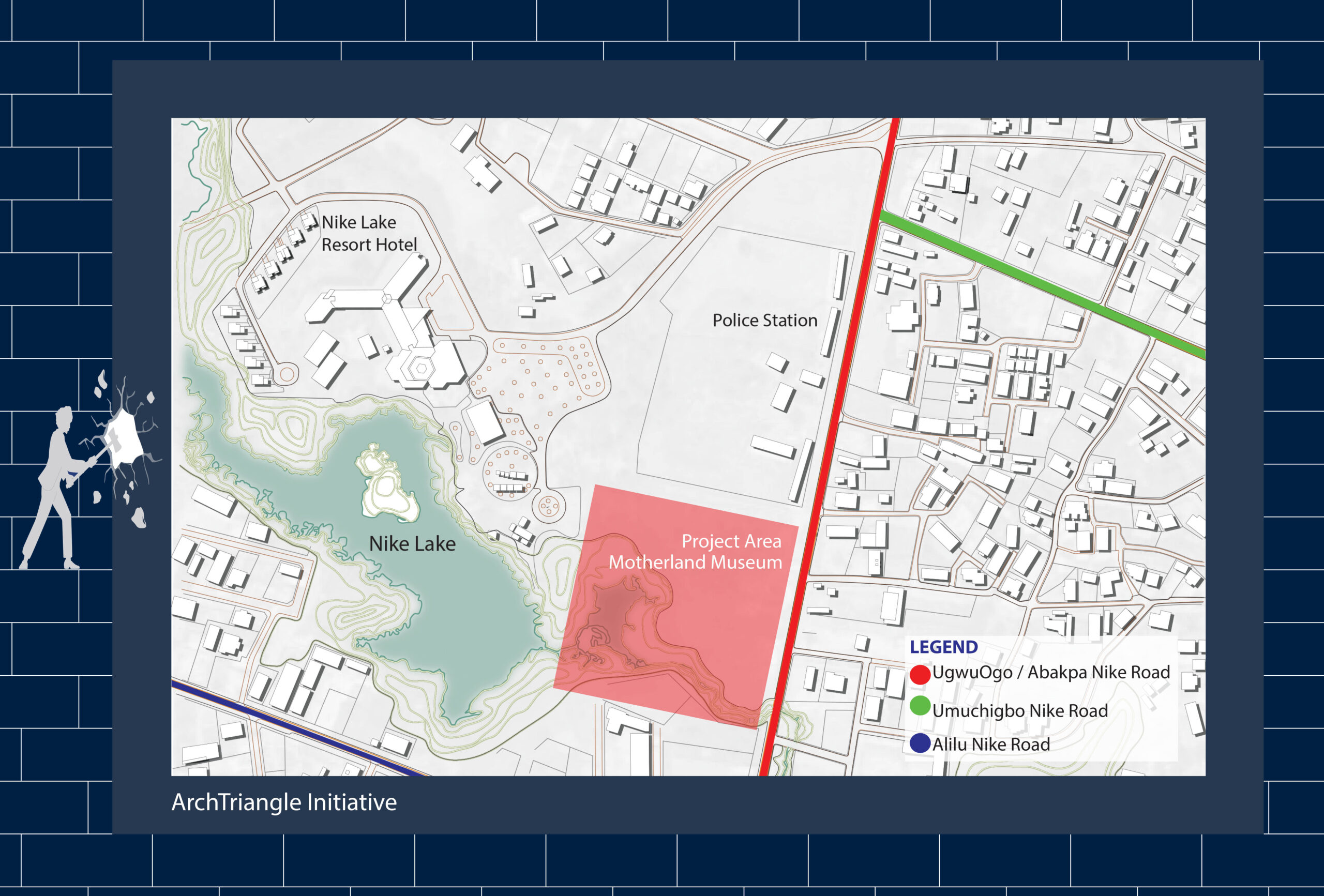
Set between Lake Nike, the Nike Resort, and the historic monument grounds, the Motherland Museum is the focal point of one of Nigeria’s most significant cultural sites. Visitors can arrive by road, by boat through Lake Nike, or on foot via walkways inspired by traditional ceremonial paths. The museum features four symbolic entrances. Southsouth gate: A water fountain, statues of world freedom fighters, and a symbolic culvert representing the Triangular trade (slave triangle), Southeast gate: Is a monumental plaza representing Nigeria’s civil wars heros and villains. Northeast A roundabout flanked by the flags of all 54 African nations, all erected on a labyrinthine base. Northwest A dock entrance directly linked to the resort
Motherland Museum does not stop at the Igbo
It makes a bolder claim, one that demands the world’s attention and respect. It asserts that the Igbo tribe, and by extension the entire sub-Saharan African family of peoples, are among the oldest continuous civilizations on Earth. More than that, the Museum invites us to see sub-Saharan Africa as the parents of all mankind, the ancestral home whose deep history cradled the earliest sparks of what we now call modern civilization.
The 3rd Eye Museum is a claim of origin and dignity
This is not a claim of superiority. It is a claim of origin and dignity. It asks the world to recognize that before the pyramids of Egypt, before the aqueducts of Rome, before the steel of Damascus, there were Igbo blacksmiths in Nsukka shaping iron with fire and intelligence. It asks that the complex societies of Great Zimbabwe, the Nok culture, the Kingdom of Kush, and countless others be given their rightful place in the global story of human achievement.
Form & Spirit
The building stands on a 100m x 100m base, the same footprint as the Eiffel Tower, but its form speaks entirely in African terms. At its crown sits the Queen Mother Corona, a transparent oval structure shaped like a ceremonial cup and Eucharistic host. It symbolises the intertwining legacies of faith, empire, and memory.
The design draws from:
The Nsude pyramids
The Benin Walls
Igbo basketry (Nkata)
Ancient Nsibidi script
A bronze-toned lattice wraps the building like woven cloth, catching light and shadow throughout the day.
Inside, four wings connect through spiral stairs, elevators, and walkways that carry visitors through a layered experience of history and culture.
Why does Motherland Museum matter today?
Because modern civilization, for all its dazzling technology and global connectivity, suffers from a profound amnesia. It has built walls of historical silence around Africa, treating the continent as a latecomer to progress rather than its early architect. That amnesia has real consequences: it fuels prejudice, justifies exploitation, and robs young Africans of the pride that comes from knowing one’s ancestors were pioneers, not passive recipients.
The Sacred Loop
At each of the four cardinal points, a staircase leads up to an 80-meter-high panoramic walkway. This elevated ring honors the erased Benin Walls and offers views of the lake, gardens, and sculpture path.
Below, ground-level paths and bridges mirror this circular journey, connecting courtyards, gardens, and reflective spaces. Movement through the site is intentionally looped, echoing African cosmologies of time and return.
A solemn call from Mother Nature
The Motherland Museum asks the world not for charity, but for recognition. It asks that the ancient iron furnaces of Nsukka be spoken of in the same breath as the forges of Anatolia or the smelters of the Indus Valley. It asks that sub-Saharan Africa be seen not as a peripheral footnote, but as a central pillar of human heritage, a heritage that modern civilization has a duty to protect, preserve, and learn from.
what it stands for
Its a landmark project that corrects the historical record by returning a stolen narrative. Architecture is not just a shell but the story itself , reviving lost civilizations, healing fractured identity, and turning confrontation with the past into a foundation for a unified future.
Why Nigeria? The Motherland Museum is the culmination of Africa’s and the Global South’s journey for liberation. It honors global liberators who fought oppression, apartheid, and injustice, including Nelson Mandela, Martin Luther King Jr., and Diana, Princess of Wales. A sacred space connecting Africa’s struggle to the universal fight for dignity. A pilgrimage site for lovers of pre-colonial and modern history.
Vision A global symbol from Africa for human resilience and reconciliation, illuminating the path toward a global civilization built on integrity, inclusivity, and peace.
The Motherland Museum brings cultural heritage to life.
To protect that heritage is not to freeze it in a museum case. It is to revive it, as the Motherland Museum does with Igbo ironworking, by teaching young hands to forge again, by connecting ancient wisdom with sustainable modern industry, and by telling a truer story of who we all are.
For if Africa is indeed the parent of humankind, then every person on this planet has a stake in honoring that parent, learning from its resilience, and ensuring that its voice is never again silenced.
Core Objectives
Functional home for united humanity – International internships, cultural exchange, and “National Expression Pods” for every UN member state to showcase achievements. Architecture as inclusivity – Open, flowing spaces with no opaque walls; a physical symbol of unity against division. Celebrating the “Pinnacle of Africa” gallery (ancient kingdoms like Nok, Benin, Mali, Igbo-Ukwu) + “Africa Now” pavilion. Permanent wing on the Nri Kingdom’s peace philosophy. Healing historical trauma – Annual Global Reconciliation Forums, healing workshops, and the “Hall of Shadows and Reflection” documenting colonialism and the slave trade with dignity. Honoring global struggle – “Circle of Liberators” hall with immersive biographies of diversity activists from all continents.
The Motherland Museum is a bridge across time and prejudice. It is a promise that the ancient blacksmiths of Nsukka will not be forgotten. And it is an invitation to all of us, Igbo, Nigerian, African, and global citizens alike, to walk through its doors and remember: civilization began long before we wrote its history. And much of that beginning lies in the soil and soul of Africa.
We invite you to join this long journey toward a united world. Write your name on the wall of the most complex iron structure of the 21st century.
Call to Action
We seek partners, governments, foundations, and visionaries who believe that a museum can be more than a destination. The Motherland Museum is architecture of integrity, built not to impress, but to include. It is the literature of our future, a story yet fully written, awaiting every voice. And it is the music of a united world rising from Africa.
Join us. Together, we forge a legacy that echoes across continents and generations.