



Description
Introduction History is not merely a record of rulers and wars. It is a story of tides, the relentless currents of rebellion, renaissance, and revolution that rise to meet them. These are movements: the pulse of human progress, the forces that carry society forward. Sometimes they flow peacefully; often, they break with fury. But they always carry the promise of transformation.
Every movement begins not with a roar, but with a whisper. It starts when ordinary people dare to ask simple questions: “Why must things be this way?” “Do they have to stay this way?” The search for answers becomes a chorus that shakes the foundations of the seemingly unchangeable. This is how civilisations evolve.
The world we live in was built by movements. They are not born solely in parliaments or on battlefields, but in cafés, crowded rooms, and university campuses. They are championed through art and music, in protests and petitions, in the quiet dignity of refusal and the electrifying power of collective action.
History does not move in a straight line. It leaps, sometimes forward, sometimes back. The Renaissance was a leap, as thinkers in Italy used art and science to challenge a dark age. The Enlightenment was another, championing reason and inherent human rights over the divine right of kings.
The abolitionist movements declared the self-evident truth that no person should own another. The suffrage movements insisted that half the population deserved a voice. The Civil Rights Movement, Indian Independence, and the fight against apartheid each proved that sustained, courageous pressure could dismantle even the most entrenched systems of oppression.
Not all movements are overtly political. The Harlem Renaissance redefined Black identity through art. The global phenomenon of Beatle-mania was more than pop music; it was a cultural quake that reshaped youth identity, fashion, and attitude across continents.
Today, movements have found a new pulse in the digital age. Hashtags spill into streets, viral videos awaken consciences, and online communities become real-world forces. #MeToo and Black Lives Matter are proof that while the tools change, the human hunger for justice does not.
Power rarely concedes without pressure. Movements are that pressure. They are living proof that true power resides with people who choose to come together.
I have always been drawn to this truth. Movements turn struggle into hope and pain into possibility. My own life is a product of movement, between identities, cultures, and continents. Born in south-eastern Nigeria and adopted into an Italian family, I learned that identity can be both fractured and beautiful.
As an architect recognized by three professional bodies, the Berlin Chamber of Architects, the Nigerian Institute of Architects, and the Order of Architects Italy, I believe it is time for those who build civilization to rise up and use our influence. Our most powerful tool is design. My mission as an architectural diplomat is to wield this tool for two vital purposes: reconciliation and the fight against global youth unemployment.
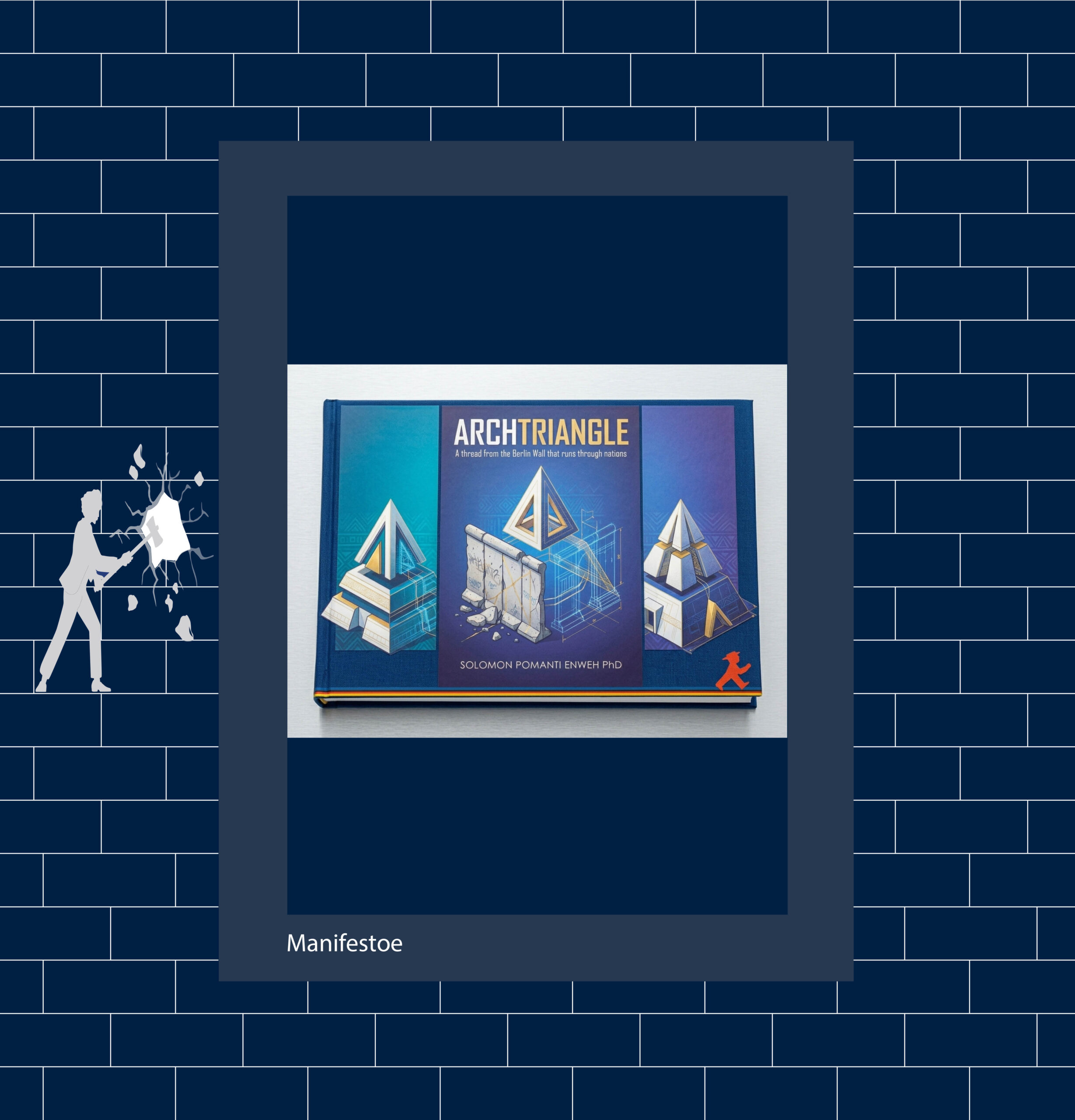
From this vision, the ArchTriangle Initiative was born. It is a movement to reclaim a symbol of division, the historical slave triangle, and transform it into a new geometry of connection. We call our design approach “Afro-Beat Architecture”, a style intended to harmonize humanity and celebrate our shared rhythms. It is a direct response to Martin Luther King Jr.’s urgent warning: “We must learn to live together as brothers or perish together as fools.” My team, composed of both foreign and local youth architects, believes that proposing these projects will not only help to heal the world in a small way but will also ignite the curiosity that brings people together.
Our alignments with universities and professional institutions will help make this project the true “Architecture of Peace”. We start by proposing a radical alternative to the drumbeats of conflict: peace talks through landmark buildings. For any nation that agrees global progress relies on mutual understanding, we offer not just words, but blueprints.
We are positioning the ArchTriangle as the bridge to connect the dots, using the very land where history’s worst divisions occurred, like the Berlin Wall, as the foundation for global reconciliation. Our first concrete steps are three trilateral projects, each designed to heal a specific historical wound:
The United Berlin / Cable Pyramid (Germany) – A symbol of reconciliation on the soil that once witnessed the ultimate division.
The Biblioteca in Campagna / Countryside Library (Italy) – A global library in the Italian countryside to welcome the world’s literature and histories, countering cultural insularity.
The Motherland Museum / Third Eye Pyramid (Nigeria) – An institution to restore lost pre-colonial history and reclaim narrative sovereignty.
These are more than buildings. They are engines for skills exchange and youth engagement. Extending from them is the Arch*Net, a digital platform that will empower students from all nations to tell their own stories through the lens of their maternal heritage, bypassing colonial distortions and connecting a new generation of peace-builders.
This mission resonates with my own heritage. As a direct descendant of a long lineage of kinsmen from the ancient Nri Kingdom, I was raised with the understanding that this is how pyramids were built around the world, as testaments to unity and power for a progressive world.
I wrote this book as a guide. It is for anyone who feels the urge to start something, whether a small community project or a global campaign. It is filled with the hard-won lessons of history and a simple, bold call: to step forward and build.
As Mahatma Gandhi urged, “Be the change you wish to see in the world.” The moment you stop waiting for change and start living it, you stand at the edge of a movement. My journey with the ArchTriangle began at this edge. In these pages, I invite you to find your own.
Let us begin.
Reviews (00)
There are no reviews yet.